

Fraud Alert - AI Voice Scams a Serious Threat
01/07/2026
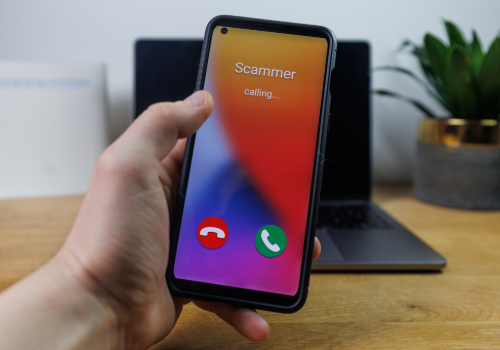
Fraudsters often take advantage of new technology to trick consumers into giving them money. Utilizing Artificial Intelligence (AI) to impersonate law enforcement, employees or family members is an example of the negative side of such technological advancements.
While scammers often spoof email addresses to trick consumers into sending money to help a friend or family member, AI allows them to employ the same tactics to phone calls. Through a method called voice cloning or a deepfake scam, a criminal uses AI to mimic someone’s voice from a very small audio sample.
These fraudsters may call you, claiming to be a family member, and try to trick you into believing there was an emergency that requires an urgent transfer of funds. Some of those emergency messages are: ‘Help, I was in a car accident;' 'the police found drugs in the car;', and 'I need money to post bail.'
To help prevent such scams, TruBank is sharing five tips on how you can protect yourself and others.
- Don’t panic. Scammers prey on your emotions. If you think a loved one is in danger, you’re more likely to act quickly without questioning the validity of the situation. Before you act, take a step back and think about the request that is being made. Contact the loved one personally before acting to verify the situation. If the impersonator tells you not to contact anyone, that is a large red flag it is an actual scam.
- Trust your instincts. If you receive such a call from but something feels off, there’s a good chance that it could be a scam. Rely on your intuition in these situations. If something doesn’t feel or sound right, a little bit of investigation can save you money and heartache.
- Know how to spot red flags. There are many warning signs that can help you determine if such a phone call is a scam. Some red flags to watch for include:
-
- The call comes from an unknown number.
- You are told to keep the conversation secret from everyone.
- Payment demands are to be made via cryptocurrency or gift cards.
- You are asked for personal or financial account information.
- Call the person that supposedly is contacting you. If you receive this type of phone call, there is one person you can rely on to verify its legitimacy - the actual person who supposedly contacted you. Call or text that person using the contact information you have saved for them. You’ll find out quickly whether it was a scam.
- Be proactive. Stay ahead of the fraudsters by choosing a safe word only your family knows that you can use to verify their identity over the phone.
If you receive a suspicious phone call from someone impersonating someone you know, report it to the Federal Trade Commission immediately at https://reportfraud.ftc.gov or by calling 1-877-382-4357. You should let friends and family know you received the call, so they can be on alert for suspicious calls as well.